

















Kimi software alternatives

Best Kimi Alternatives in 2026

Updated July 17, 2026 · 20 ranked

DeepSeek and GLM-5.2 rival Kimi K3 on open-weight cost; Claude Opus and GPT-5.6 lead on certifications and a no-training-by-default posture.

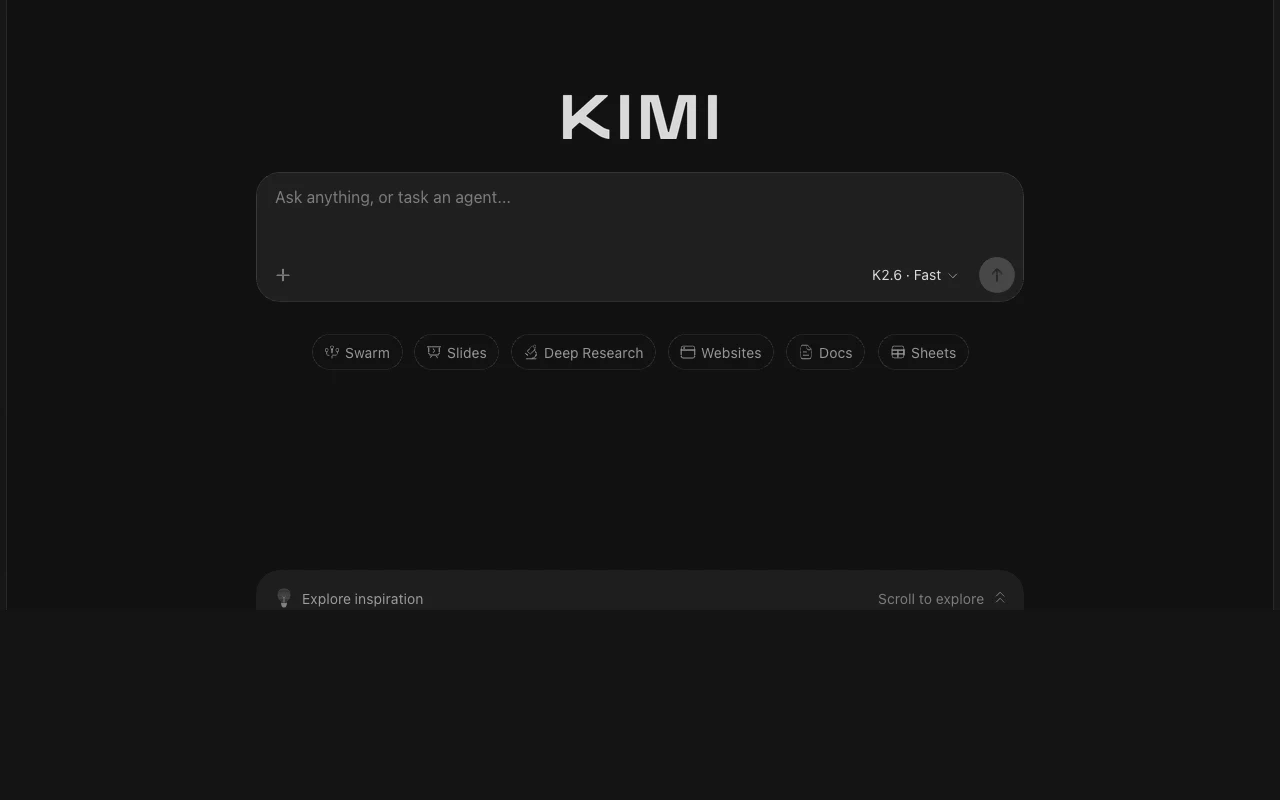
Kimi interface screenshot

Feature Overview: Top Kimi Alternatives

Kimi compared against all 20 large language models alternatives. Pricing, free plan availability, rating, and large language models-specific capabilities.


How Does Kimi Compare to Alternatives?

Independently verified metrics. Sources: LMSYS Chatbot Arena, HumanEval, artificial-analysis.com, vendor pricing pages. Verified 2026-07-17.

ToolArena ELOMMLU%HumanEval%TTFTmsOutput TPStok/sContextInput $/1M$Output $/1M$
Kimi (this)--------
OpenAI API1,35888.7%90.2%320110128K-200K$2.5$10
ChatGPT--------
Anthropic API (Claude)1,26888.3%92%-----
Llama (Meta)1,19083.6%72.6%-----
DeepSeek1,28087.1%86.7%-----
Claude--------
Arena ELO: LMSYS Chatbot Arena community ELO. Higher = stronger overall.MMLU: Multitask Language Understanding accuracy. Benchmark ≥85%.HumanEval: Code generation pass@1 accuracy. Benchmark ≥80%.TTFT: Time to First Token. Benchmark <200ms for streaming APIs.Output TPS: Output Tokens Per Second. Benchmark >80 TPS heavy, >300 TPS fast.Context: Max tokens per request (128K–2M).Input $/1M: Cost per 1M input tokens in USD.Output $/1M: Cost per 1M output tokens in USD.

When Should You Stick with Kimi?

Alternatives are not always the right move. Kimi remains strong in these scenarios.

Stick with Kimi if you need
  • +Top-5 independent intelligence (Artificial Analysis Index 57, #4/189) at $3/$15 API rates, a fraction of the Opus tier
  • +Automatic prompt caching drops input from $3.00 to $0.30 per 1M with nothing to configure, no TTL or storage fee
  • +1M-token context window as standard, no context-length pricing bands to reason about
  • +Open weights under a Modified MIT license (expected July 27, 2026) make fine-tuning and self-hosting a real option
  • +Global platform runs on Singapore infrastructure under Singapore law, a cleaner data-residency story than a China-only stack
Consider an alternative when
  • -Reasoning is always on and the model is very verbose (130M tokens on the AA eval vs a 63M average), so output cost at $15/1M runs high
  • -The 60% Batch API discount does not cover K3 at launch; it only applies to k2.7-code, k2.6, and k2.5
  • -No real free API tier on the global platform: a $1 minimum recharge is required and Tier0 is throttled
  • -No published compliance certifications (no SOC 2, ISO 27001, or HIPAA stated anywhere in the docs)
Before You Switch: 5-Step Migration Checklist
1Export your Kimi data — documents, settings, templates, and API credentials
2Audit all integrations and automations built on Kimi
3Run a 2-week parallel trial on a non-critical workflow before cancelling Kimi
4Calculate true cost delta: include retraining time + data migration, not just subscription price
5Confirm the alternative covers your primary use case — a lower price is worthless if core workflows break

Why Teams Switch from Kimi

After reviewing 20 competing LLM platforms, here's where each alternative outperforms Kimi - and when staying makes sense.

Expert Take

Kimi K3 makes sense when you want near-frontier intelligence and API cost is the binding constraint: an Artificial Analysis Index of 57 (fourth of 189, above Opus 4.8) at $3 input and $15 output per 1M turns a five-figure inference bill into something smaller, especially once the automatic 90% cache-hit discount kicks in. The friction shows up in two places. Cost-side, reasoning is always on and the model is verbose, so output tokens climb and there is no Batch discount for K3 yet. Trust-side, Moonshot publishes no compliance certifications and defaults to training on your content unless you sign an enterprise agreement. Before you build on it, weigh that against an Opus-tier provider, which costs more per token but brings the certifications and no-training-by-default posture that regulated buyers need on paper.

·Oleh KemOleh KemFounder & Lead Analyst
OpenAI API logo
Foundation Model$0.25/1M tokens

A unified developer API for accessing OpenAI's frontier models for text, vision, audio, and fine-tuning.. Rated 4.8/5 vs 4.5/5 for Kimi.

Why Choose OpenAI API
  • +One API covers text, vision, audio in and out, embeddings, and native image generation, so you are not stitching four vendors together
  • +GPT-5.5 for hard reasoning down to nano tiers for high-volume classification, priced across a wide range
  • +The Batch API takes 50% off every model, and prompt caching cuts repeated context by another 50%
  • +o3 and o4-mini handle multi-step reasoning tasks that trip up the general chat models
  • +The largest developer community of any provider, so most integration problems are already solved somewhere
  • +GPT-5.5 access
  • +DALL-E 3
  • +Whisper speech-to-text
Points of Friction
  • No flat monthly fee means a busy production app can run up a bill fast, and the meter never stops
  • Rate limits are tied to spend tier, so a new account on Tier 1 gets throttled long before a Tier 5 org does
  • Model versions get deprecated on OpenAI's schedule, and behavior drifts between them, so pinned prompts break

A versatile AI assistant for generating human-like text, code, and analysis from natural language prompts.. Rated 4.8/5 vs 4.5/5 for Kimi.

Why Choose ChatGPT
  • +Frontier models on tap: GPT-5.5 for hard reasoning, cheaper GPT-5 and mini tiers for volume
  • +Largest third-party ecosystem, custom GPTs, and connector support of any assistant
  • +Multimodal in one place: voice, images in and out, file uploads, and web search
  • +Free tier is genuinely usable, not a teaser
  • +Simple interface that non-technical people pick up in minutes
  • +AI text generation
Points of Friction
  • On long, strict prompts it drifts, ignoring parts of the instruction you spelled out
  • Still hallucinates on niche or technical questions, so anything factual needs a second check
  • Free tier slows down and hits caps at peak hours

Anthropic's API providing access to Claude models with industry-leading safety, 200K context windows, and strong reasoni. Rated 4.8/5 vs 4.5/5 for Kimi.

Why Choose Anthropic API (Claude)
  • +Up to 1M token context on the frontier models, enough to load an entire codebase or contract set in one call
  • +Opus 4.8 for the hardest reasoning, Sonnet 5 for balance, Haiku 4.5 for cheap volume, priced per workload
  • +Holds long instructions and output formatting better than most under load, which matters for coding agents
  • +Constitutional AI training keeps harmful output low, which is why safety-sensitive teams pick it
  • +Tool use, JSON mode, and a Batch API that halves the rate for offline high-volume jobs
  • +Claude Opus 4.8/Opus/Haiku
Points of Friction
  • Text and vision only, so any image or audio generation means bolting on a second provider
  • The stricter content policy still refuses some legitimate business prompts, like sharp competitive teardowns
  • The raw API has no built-in spend cap, so an IDE agent chewing through big codebases can post a surprise bill
Llama (Meta) logo
Foundation Model$0.11/1M tokens

An open-source foundation model for building, fine-tuning, and self-hosting custom generative AI applications.. Rated 4.7/5 vs 4.5/5 for Kimi.

Why Choose Llama (Meta)
  • +A permissive license that allows commercial use and modification, not just research
  • +Strong current-generation performance for open weights across the Llama 4 family
  • +Full data control and privacy, since the model runs entirely on infrastructure you own
  • +A huge ecosystem of fine-tuned variants and tooling on Hugging Face to build from
  • +Multiple parameter sizes, so you can match the model to the hardware you actually have
  • +Open source & free
Points of Friction
  • Self-hosting demands real GPU capacity and ML engineering, so free weights still carry a serious infrastructure cost
  • Less polished and integrated than a managed API like OpenAI's, so you assemble the tooling yourself
  • The license adds restrictions for products above 700M monthly active users, which large consumer apps must clear
DeepSeek logo
Foundation Model$0.14/1M tokens

An open-source LLM offering GPT-5 class reasoning and multilingual power at a fraction of the API cost.. Rated 4.7/5 vs 4.5/5 for Kimi.

Why Choose DeepSeek
  • +V4-Flash at $0.14 per 1M input undercuts the frontier labs by a wide margin, and cache hits cut that ~98% more
  • +Open weights you can actually fine-tune and self-host, no gatekeeping and no vendor lock-in
  • +Strong multilingual work, Mandarin especially, where the Western models are weaker
  • +Chain-of-thought reasoning that shows its steps, which compliance teams can audit line by line
  • +The web and mobile chat is free, so evaluating the model costs nothing before you touch the API
  • +Open source
  • +Chain-of-thought reasoning
Points of Friction
  • Documentation and community forums lean Mandarin-first, which slows English-speaking teams on setup and debugging
  • The tooling and integration ecosystem is thinner than OpenAI's, so more of the plumbing is on you
  • The China origin triggers data-residency and corporate-security bans that rule it out for some regulated buyers
Claude logo
Claude4.6G2
Foundation ModelFrom $20/mo

An AI assistant for sophisticated dialogue, content creation, and complex reasoning with a focus on safety and long cont. Rated 4.7/5 vs 4.5/5 for Kimi.

Why Choose Claude
  • +Industry-leading 1M token context window for deep analysis
  • +Excels at nuanced writing, summarization, and creative tasks
  • +Strong constitutional AI framework prioritizes safety and ethics
  • +Artifacts feature for iterative code generation and editing
  • +Generous free tier with access to the powerful Sonnet model
  • +Long context (1M tokens)
  • +Document analysis
Points of Friction
  • No native image or video generation, so any visual work means bolting on a separate tool
  • Pro usage limits bite on heavy days, and even Max meters you by credits rather than running unlimited
  • Opus sits at the top of the API price range, so token-heavy pipelines add up faster than with cheaper models

The collaborative platform for building, training, and deploying state-of-the-art machine learning models.. Rated 4.7/5 vs 4.5/5 for Kimi.

Why Choose Hugging Face
  • +Massive hub of 500K+ open-source models and datasets
  • +Transformers library simplifies using state-of-the-art models
  • +Integrated Spaces for building and sharing live ML demos
  • +Strong community for collaboration and support
Points of Friction
  • Navigating the vast model hub can be overwhelming for newcomers
  • Inference Endpoints can be costly for high-traffic applications
  • Fine-tuning large models requires significant compute resources
Cohere logo
Cohere4.5G2
Foundation Model$0.0375/1M tokens

An enterprise AI platform with production-ready LLMs, embeddings, and reranking for building advanced search and RAG app.

Why Choose Cohere
  • +Command A carries enterprise RAG and tool use, tuned for grounded answers over your own data rather than open chat
  • +State-of-the-art multilingual embeddings across 100+ languages, which most rivals do not match at that spread
  • +A dedicated Rerank endpoint that measurably lifts search relevance instead of leaning on the LLM to sort results
Points of Friction
  • Fewer open or fine-tunable models than competitors, so deep custom-tuning options are limited
  • Native integrations thin out past the major clouds like AWS and Oracle, so niche stacks need custom glue
  • Little focus on creative or general-purpose consumer work, it is built for search and RAG, not chat

Showing 8 of 20 alternatives


Find Your Match - By Use Case

For Coding Agents

Code generation, debugging, and IDE-integrated workflows

For Long Documents / RAG

Large context windows for document analysis and retrieval-augmented generation

Open Source / Self-hosted

Open weights for privacy, fine-tuning, and on-premise deployment

For Speed & Latency

Ultra-low latency inference for real-time apps and high-throughput workloads

Budget / Free

Free plans or pay-per-use with minimal cost at moderate scale


Oleh KemOleh KemFounder & Lead AnalystExpert verified·Updated July 17, 2026·Our methodology
Price & Data Intelligence SyncLast verified: July 17, 2026 · ce-rev-20260717-kimi-k3-001 · ✓ Pricing updated
Up to date

Common Questions About Switching from Kimi


Sources & verification

Verified by ComparEdgeMethod: Vendor docs and official pages
SourceWhat was checkedLast checked
Official WebsiteOfficial vendor website
Official Pricing PageSource of verified tiersJuly 17, 2026

Every fact on this Kimi pricing page is tied to a named source and a verification date. Freshness-sensitive figures trace to the sources above; verify against the vendor before relying on them.