

BuildShip Review: Features, Pricing & Integrations 2026
This low-code backend builder excels at visual AI workflows but is still maturing. Plans run from free to $449/mo, with Starter at $19 and Pro at $59.
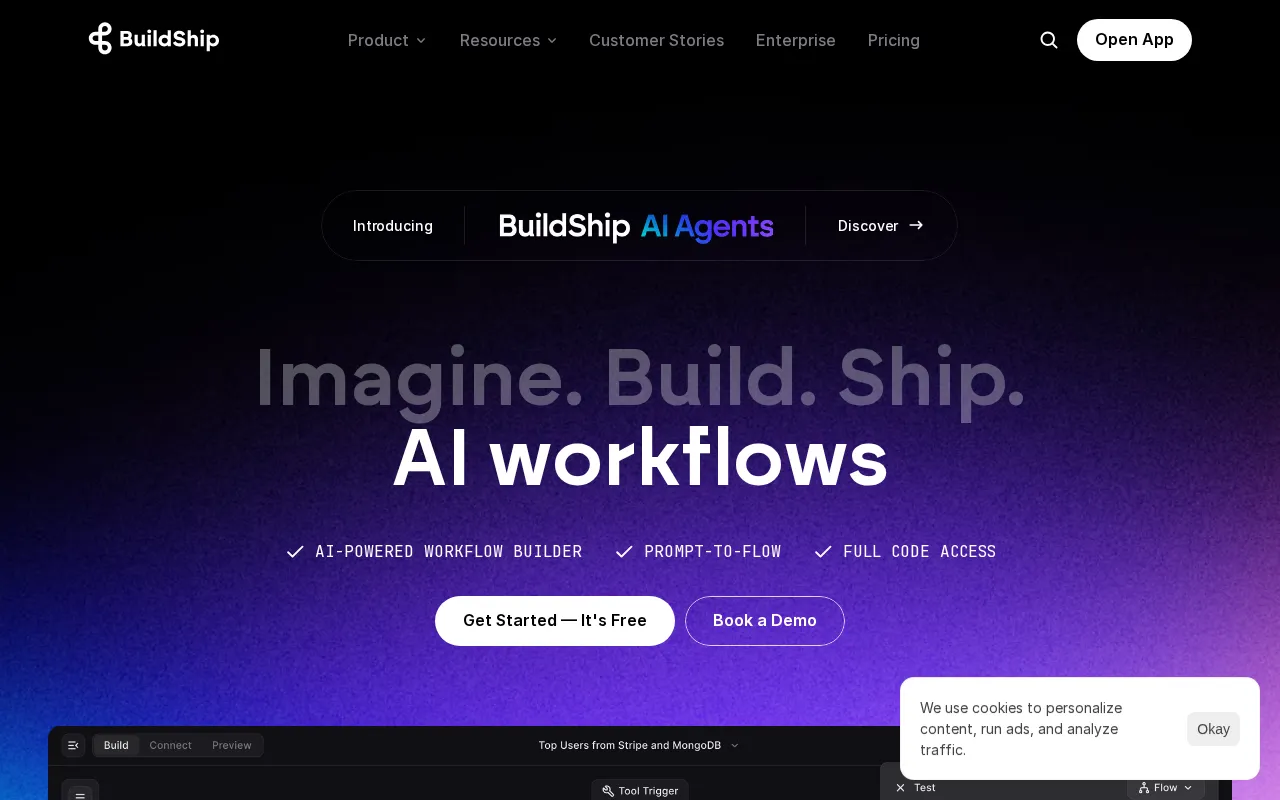
Expert Analysis of BuildShip
BuildShip is the backend half of the no-code stack, billed in credits from 3,000 free to 300,000 on Business. It pairs naturally with FlutterFlow and Webflow front ends. Debugging is the honest weakness: users call the logs confusing when a flow fails.
 Oleh KemFounder & Lead Analyst
AI API Endpoint Built Without Backend Code
BuildShip's workflow canvas chains GPT nodes, database queries, and HTTP requests into a REST endpoint that deploys in one click to a managed serverless runtime.
Scheduled Data Processing and AI Summarization
Cron trigger nodes fire workflows on schedule, running nightly data transforms, AI summarizations, and webhook deliveries without managing any infrastructure.
AI Backend for No-Code Frontend Apps
BuildShip webhook triggers receive payloads from Bubble or FlutterFlow, process them through AI nodes, and return structured responses, bridging no-code frontends to AI backends.
Free
FreeBest for: This plan is ideal for individuals or small projects just starting out with BuildShip
- ✓3,000 credits
- ✓5 active flows
- ✓1 team member
- ✓2 database tables
- ✓5 concurrent executions
Showing 3 of 5 plans. See all plans & API pricing →
Prices last verified July 8, 2026
Monitored Plans & Rates
Currently TrackingComparEdge is tracking BuildShip pricing. No price changes recorded. Plan structure changes detected: 1 plan added.
Plan Structure Changes
The Final Verdict: Is BuildShip Right for You?
Exceptionally rated website builders software built for Frontend developers building serverless backends who need focused workflows.
Top Pros
- Great for building backends visually
- AI integration nodes built-in
- Works well with FlutterFlow and Webflow
Watch Out For
- Newer platform still maturing
- Run limits on lower tiers
Oleh KemFounder & Lead AnalystExpert verified·Updated July 8, 2026·Our methodologyFrequently Asked Questions About BuildShip
Explore More Website Builders Tools for 2026






Sources & verification
| Source | What was checked | Last checked |
|---|---|---|
| Official Website | Official vendor website | — |
| Official Pricing Page | Source of verified tiers | July 8, 2026 |
| G2 | G2 verified user reviews · 4.7/5 · 15 reviews | — |
| Capterra | Capterra verified user reviews | — |
Every fact on this BuildShip pricing page is tied to a named source and a verification date. Freshness-sensitive figures trace to the sources above; verify against the vendor before relying on them.
Explore BuildShip
Every page on BuildShip in one place, you are on overview.
You are here
Importing data, onboarding effort and switching safely
SEO output and page performance of sites it builds
Every tier and the entry price
Hidden fees, discounts and how to negotiate
Compared and ranked vs peers
Price and feature change history
Browse the full Website Builders category