
MySQL Review: Features, Pricing & Integrations 2026
With a 4.3/5 G2 rating, this free database powers millions of sites. It offers 30 years of web-tested reliability but lacks advanced native encryption.
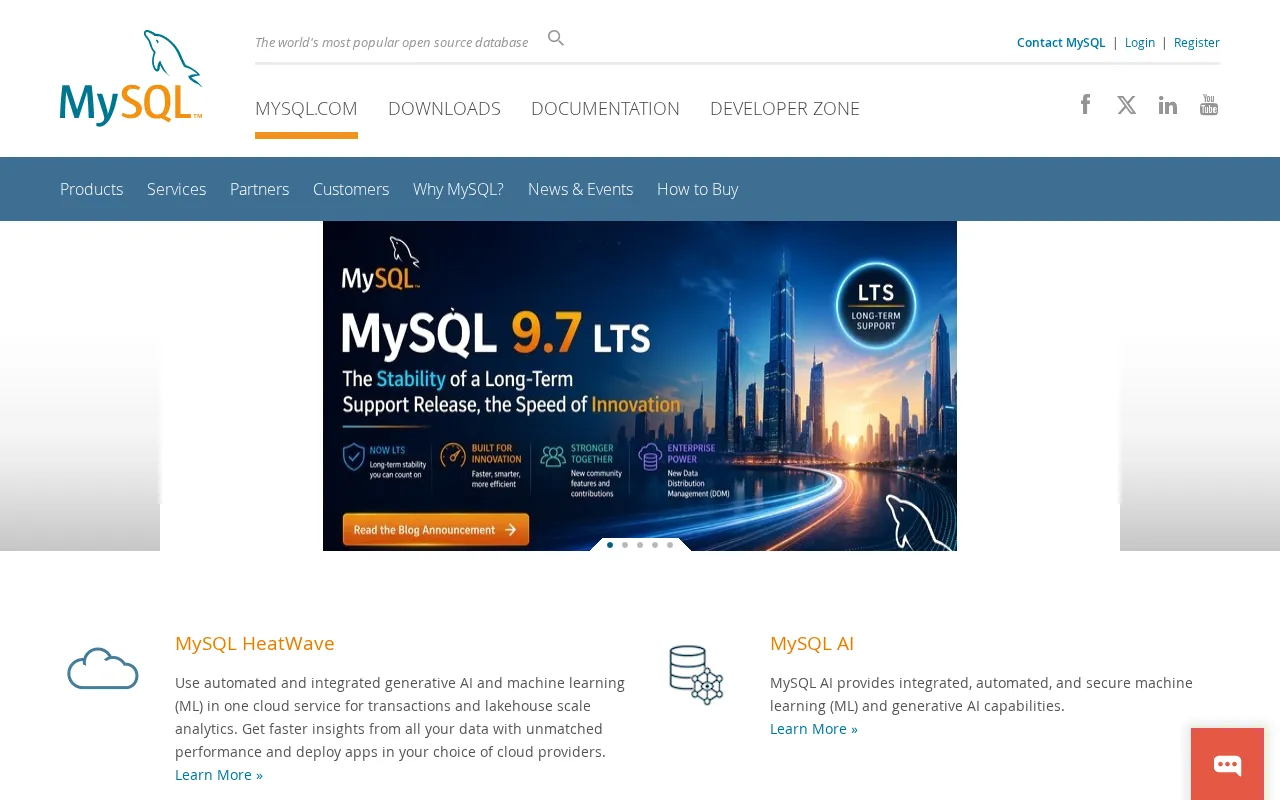
Expert Analysis of MySQL
Shops running Community rarely meet the other MySQL. Oracle sells the supported editions on annual subscriptions counted per server, with Standard Edition at $178.33 a month on that basis and two heavier editions above it.
 Oleh KemFounder & Lead Analyst
Read Replica Offloading for Reporting Queries
MySQL replication routes heavy analytical queries to a read replica, removing contention with write-heavy OLTP traffic and keeping application response times below 100ms during peak loads.
InnoDB Full-Text Search for In-App Search Features
MySQL's InnoDB full-text index supports natural language and boolean search queries on text columns without a separate Elasticsearch deployment for basic in-app search needs.
ProxySQL Connection Pooling Against Connection Storms
ProxySQL in front of MySQL pools thousands of application connections into tens of database connections, preventing connection exhaustion on deployments that scale web processes horizontally.
Community Edition
FreeBest for: Ideal for developers, small projects, and learning environments
- ✓Core relational database functionality
- ✓SQL querying
- ✓Replication
- ✓MySQL Workbench
- ✓Open source
Standard Edition
$178.33/server/moBest for: Suitable for businesses needing robust features and support
- ✓24x7 Oracle Premier Support
- ✓Unlimited Support Incidents
- ✓MySQL Database Server
- ✓MySQL Document Store
- ✓MySQL Replication
Enterprise Edition
$445.83/server/moBest for: Designed for mission critical applications requiring advanced security, performance, and management tools
- ✓All Standard Edition features
- ✓MySQL Group Replication
- ✓MySQL InnoDB Cluster
- ✓MySQL Enterprise Backup
- ✓Hot backup for InnoDB
Showing 3 of 4 plans. See all plans & API pricing →
Prices last verified July 8, 2026
Monitored Plans & Rates
Currently TrackingComparEdge is tracking MySQL pricing. No price changes recorded since monitoring began.
The Final Verdict: Is MySQL Right for You?
Consistently rated databases software built for PHP/web teams on existing MySQL infrastructure who need focused workflows.
Top Pros
- Most widely deployed database: abundant expertise and tooling
- Battle-tested for 30 years on the web
- HeatWave adds analytics and ML without ETL
Watch Out For
- The data masking functionality should be improved as well as the native encryption functionality in the MySQL database.
- The performance issues in the product can be considered as an area where improvements are required.
Developer Integrations
Oleh KemFounder & Lead AnalystExpert verified·Updated July 8, 2026·Our methodologyFrequently Asked Questions About MySQL
Explore More Databases Tools for 2026






Sources & verification
| Source | What was checked | Last checked |
|---|---|---|
| Official Website | Official vendor website | — |
| Official Pricing Page | Source of verified tiers | July 8, 2026 |
| G2 | G2 verified user reviews · 4.3/5 · 15 reviews | — |
| Capterra | Capterra verified user reviews · 4.5/5 | — |
| TrustRadius | TrustRadius verified reviews | — |
| PeerSpot | PeerSpot enterprise peer reviews | — |
Every fact on this MySQL pricing page is tied to a named source and a verification date. Freshness-sensitive figures trace to the sources above; verify against the vendor before relying on them.
Explore MySQL
Every page on MySQL in one place, you are on overview.