
Trader Joe Pricing: Plans & Fee Calculator 2026
This DEX charges no subscription. You pay only per-swap Liquidity Book fees, which vary by pool, with $0 platform fee on the basic swap page.
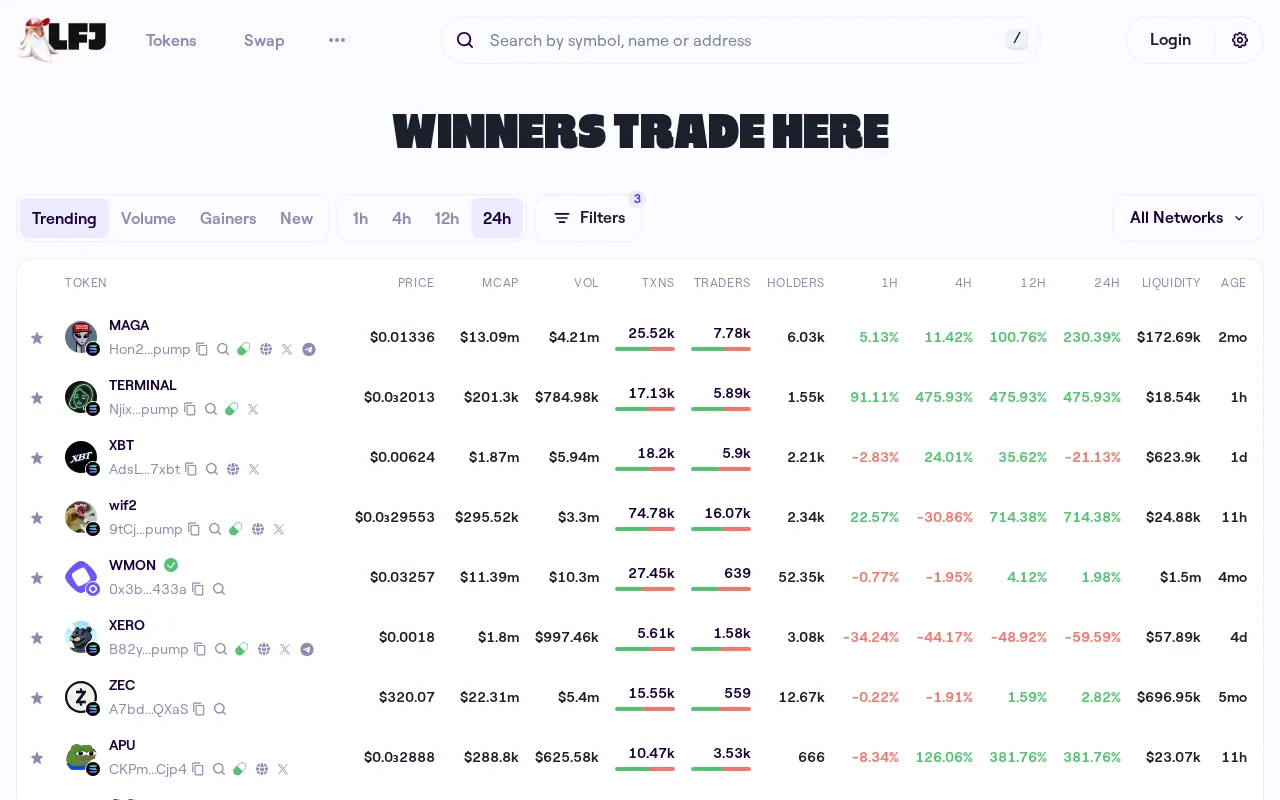
Trader Joe fees
| Tier | Maker | Taker |
|---|---|---|
| LP swap fee (Liquidity Book) | n/a | base fee + variable fee, per bin; total = swap amount x (base fee + variable fee); base fee fixed per pool by bin step; variable fee rises with volatility |
Spot trading fees. Your tier is set by 30-day volume (or holdings); the calculator above estimates your cost.
Trader Joe pricing: the quick answer
Trader Joe, now branded LFJ, charges no subscription and a 0% platform fee on the basic swap page as of July 8, 2026. What you pay there is the pool's Liquidity Book fee, a base fee plus a variable fee that rises with volatility, so the rate is dynamic. Legacy V1 pools use a flat 0.30% instead (0.25% to liquidity providers, 0.05% to the JOE treasury). Use the premium trading tools and LFJ takes 1% of output. Gas on Avalanche or Ethereum is separate.
- LP swap fee (Liquidity Book)n/a / base fee + variable fee, per bin; total = swap amount x (base fee + variable fee); base fee fixed per pool by bin step; variable fee rises with volatility
Trader Joe cost calculator
Trader Joe Hidden Costs & Pitfalls
The basic swap page is genuinely free of platform fees. The costs that matter sit in the premium tools, the legacy pools, and the gas, none of which show up in that 0% headline.
Trader Joe pricing, read against its live plans and category
Positioning
Trader Joe, now LFJ, charges a 0% platform fee on the basic swap page. Your cost there is the pool's Liquidity Book fee, a base fee set at pool creation plus a variable fee that rises with volatility, so the rate is dynamic rather than a fixed tier. Legacy V1 pools instead charge a flat 0.30% (0.25% to providers, 0.05% to the JOE treasury). The premium trading tools carry a separate 1% fee taken from output at execution. Basic swapping is genuinely cheap; the cost shows up when you reach for the extras.
Cost drivers
- 1A 1% fee on premium trading tools, deducted from your final output rather than charged up front, so it is easy to overlook.
- 2The 0.05% treasury slice of the V1 fee means a provider quoting 0.30% actually keeps 0.25%.
- 3Network gas on Avalanche or Ethereum is separate from the platform fee and paid per transaction.
Watch-outs
The Liquidity Book fee is dynamic, so the number you see quoted for a volatile pair is not the number you will always pay; it climbs with volatility, which is exactly when you are most likely to be trading. And the 1% premium-tools cut comes out of output, where it is less visible than an up-front charge.
Editor’s take
Basic swappers on Avalanche get a genuinely low-cost venue at 0% platform fee plus the pool's dynamic fee. Anyone using the premium tools should treat the 1% output cut as the real price of entry and size trades accordingly. Watch the variable fee on volatile pairs. For a fixed-tier alternative, compare Uniswap.
 Oleh KemFounder & Lead Analyst
Trader Joe price history
Cheaper Decentralized Exchanges tools



Frequently asked questions
Sources & verification
| Source | What was checked | Last checked |
|---|---|---|
| Official Website | Official vendor website | — |
Every fact on this Trader Joe pricing page is tied to a named source and a verification date. Freshness-sensitive figures trace to the sources above; verify against the vendor before relying on them.
Explore Trader Joe
Every page on Trader Joe in one place, you are on pricing.