

Cornix Review: Features, Pricing & Integrations 2026
Cornix automates Telegram signals for over 100,000 traders. Plans run $44.99-$89.99/mo to auto-execute DCA and trailing trades.
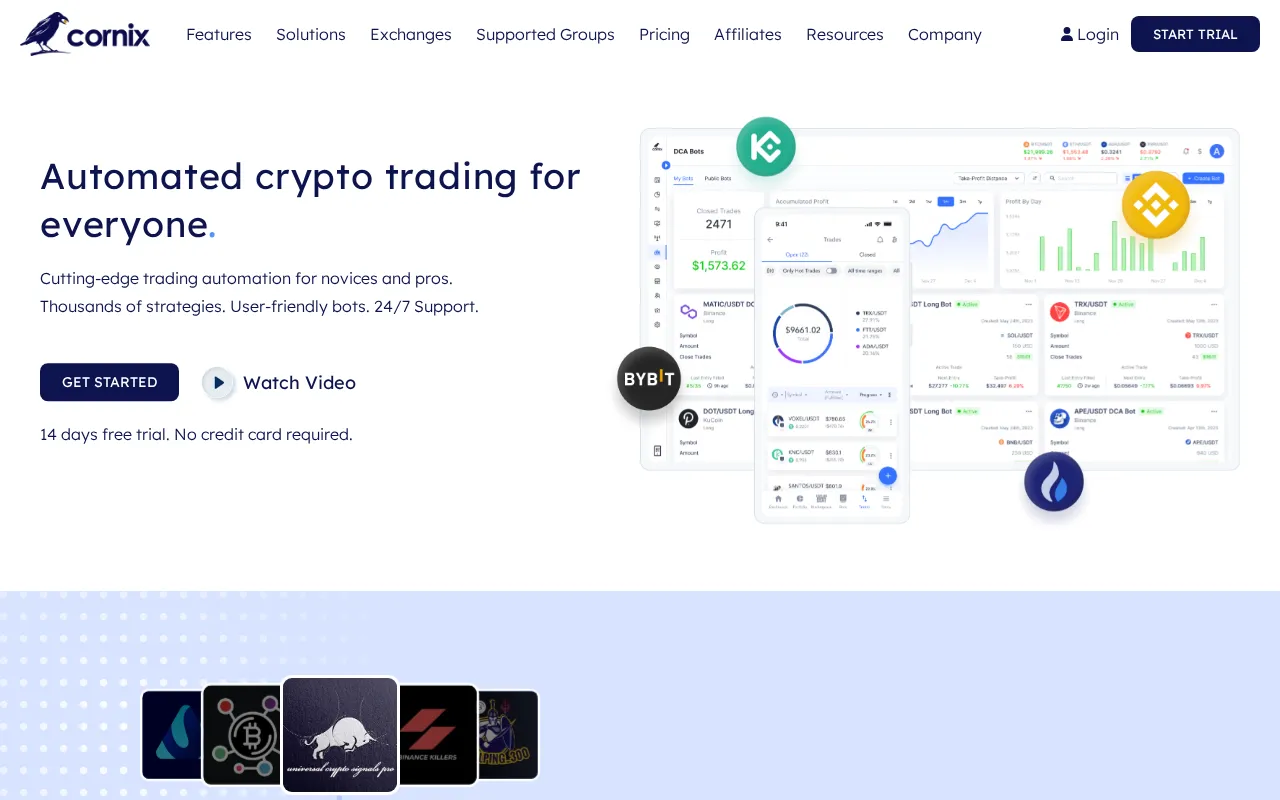
Expert Analysis of Cornix
$44.99 on Advanced and $89.99 on Premium leave a doubling with nothing in between, and both tiers carry the same feature set, so the money buys bot slots and volume. The free plan is closed to new users, which makes Starter the real entry.
 Oleh KemFounder & Lead Analyst
Execute Telegram Signals in Milliseconds
Cornix's channel integration fires orders within milliseconds of a Telegram signal, locking in posted prices before slippage erodes the entry.
Enforce Risk Rules Across Trading Teams
Customizable trade settings lock position sizing and leverage caps to policy, so every Telegram signal auto-executes within those limits across any exchange.
Route Signals to Best-Price Exchange
Cornix's multi-exchange support routes each signal to exchange, Bybit, Deribit, or OKX based on tightest entry price with no manual comparison between venues.
Audit Every Signal's Execution Outcome
Trade history analytics log each signal's execution time, slippage, and final P&L, making win rate calculation and source comparison straightforward.
Showing 3 of 5 plans. See all plans & API pricing →
Prices last verified July 8, 2026
Monitored Plans & Rates
Currently TrackingComparEdge is tracking Cornix pricing. No price changes recorded. Plan structure changes detected: 2 plans added.
Plan Structure Changes
The Final Verdict: Is Cornix Right for You?
One of the most capable crypto trading bots platforms starting at $24.99/mo, trusted by Telegram signal channel followers.
Top Pros
- Auto-executes Telegram signals with DCA and trailing TP/SL
- Supports Binance, Bybit, Bitget, and others
- Multi-account routing for different signal channels
Watch Out For
- Quality depends entirely on the signals you follow
- $39-$108/month is expensive for what it does
Oleh KemFounder & Lead AnalystExpert verified·Updated July 8, 2026·Our methodologyFrequently Asked Questions About Cornix
Explore More Crypto Trading Bots Tools for 2026






Sources & verification
| Source | What was checked | Last checked |
|---|---|---|
| Official Website | Official vendor website | — |
| Official Pricing Page | Source of verified tiers | July 8, 2026 |
Every fact on this Cornix pricing page is tied to a named source and a verification date. Freshness-sensitive figures trace to the sources above; verify against the vendor before relying on them.
Explore Cornix
Every page on Cornix in one place, you are on overview.