
Why are we still pretending npm install is safe?
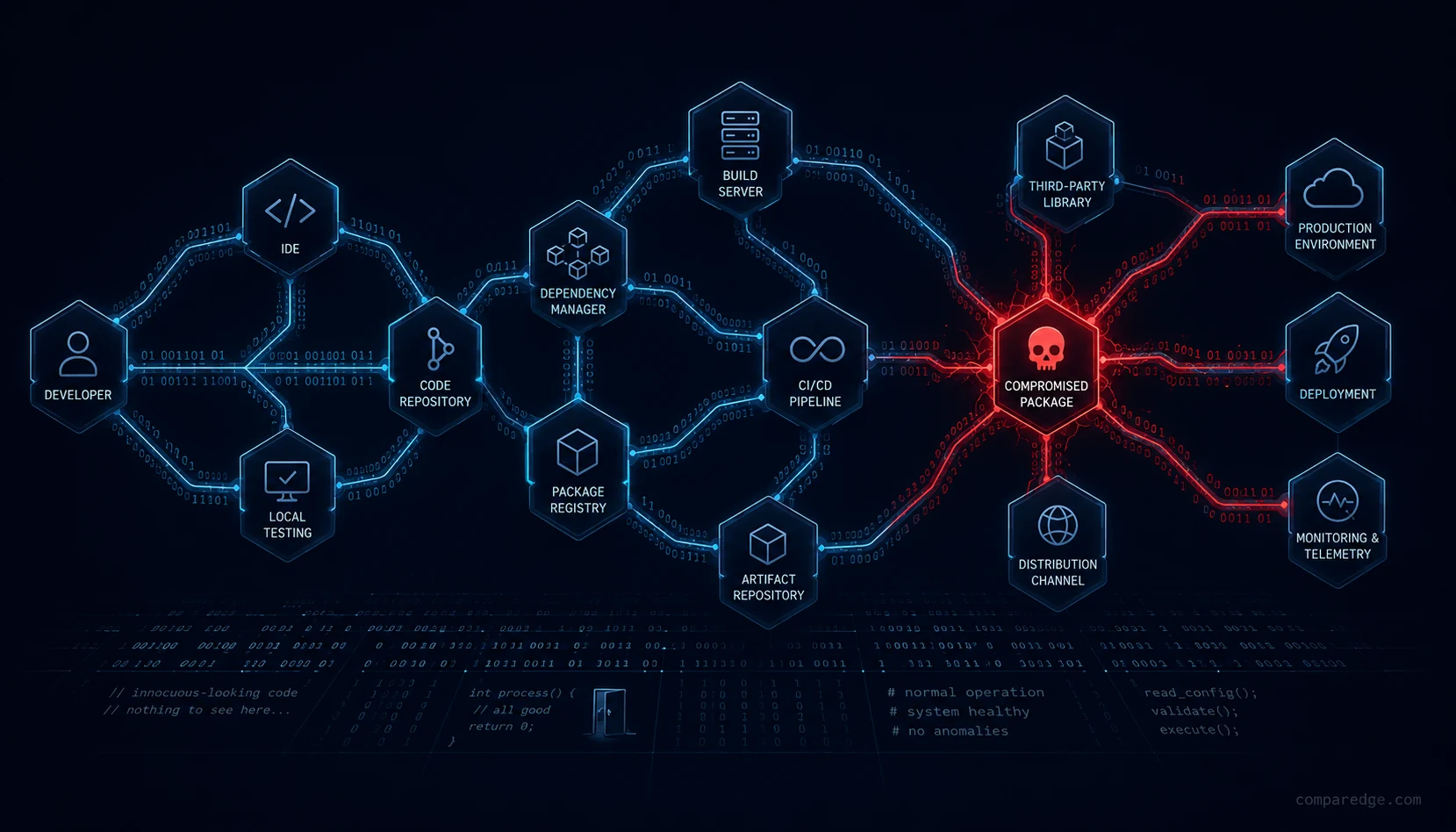
In March 2024, a single developer named Andres Freund noticed something odd. SSH connections on his Debian sid box were taking about 500 milliseconds longer than expected. That curiosity - not a security scanner, not a SIEM alert, not a multi-million dollar security stack - uncovered the XZ Utils backdoor, one of the most sophisticated supply chain attacks ever attempted against open-source infrastructure.
TL;DR:
- The XZ Utils backdoor was caught by one engineer noticing 500ms SSH latency - no scanner, SIEM, or security tool flagged it.
- Compromised maintainers spend months making legitimate contributions before inserting payloads split across multiple innocent-looking commits.
- Treat every dependency addition as a security decision; a date formatting library should never require network access.
The attacker, operating under the alias "Jia Tan," had spent over two years building trust in the XZ Utils project. Two years of legitimate contributions, helpful code reviews, and patient community engagement. The endgame was a backdoor in liblzma that would have given remote code execution capabilities on virtually every Linux system running OpenSSH. We caught it by accident. The margin between "incident averted" and "catastrophic global compromise" was one engineer's curiosity about latency.
That was 2024. It is now 2026, and the attack surface has only grown wider.
How does a supply chain attack actually work?
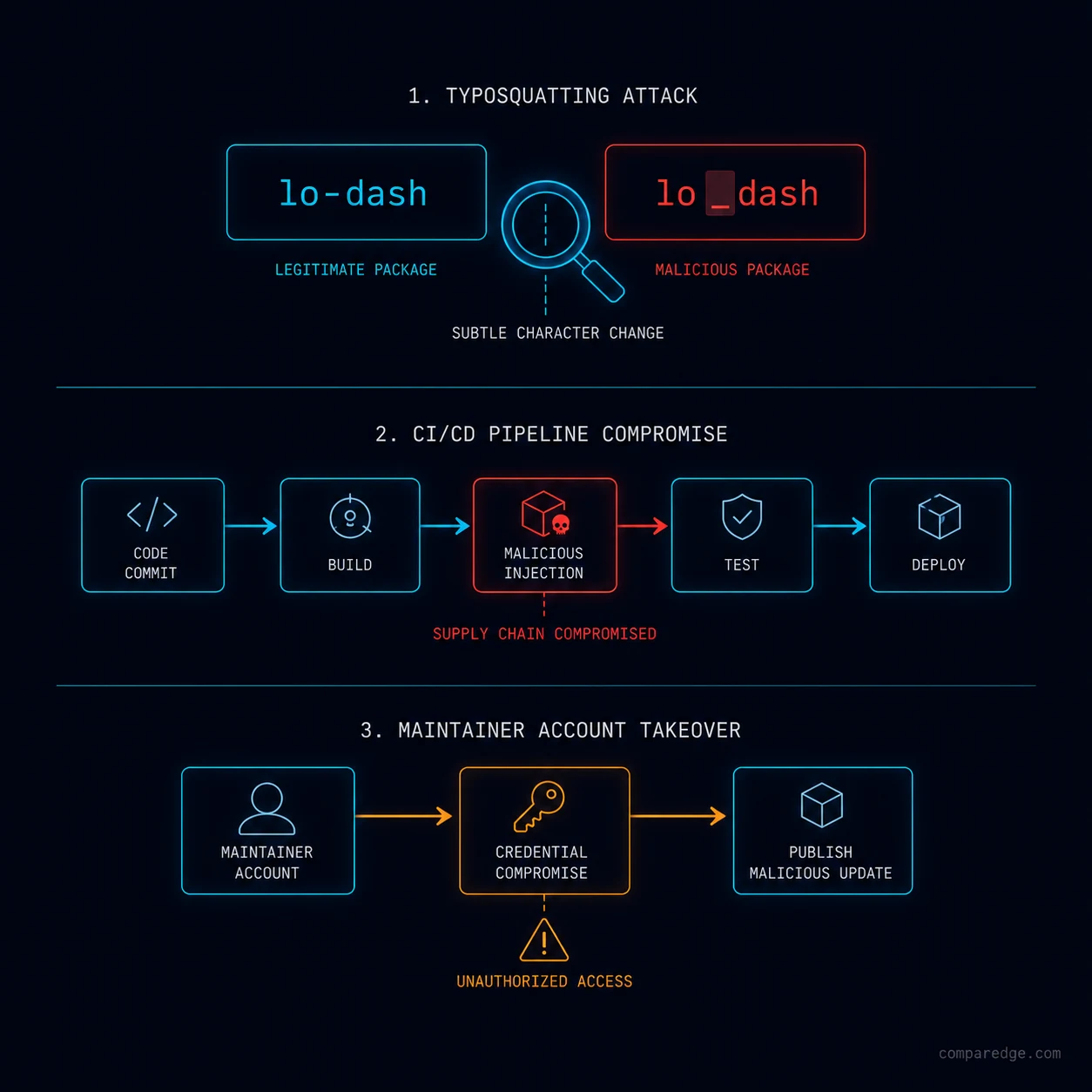
Most security discussions treat supply chain attacks as a monolithic threat. They are not. There are at least four distinct attack vectors, each with different mechanics, and conflating them leads to the wrong defenses.
Typosquatting is the crudest approach. An attacker publishes a package with a name similar to a popular one - reqeusts instead of requests, lodahs instead of lodash. The mechanics are simple: a developer makes a typo in their dependency file, the package manager happily installs malicious code, and that code runs during installation or at runtime. The attack scales because humans make typos at a predictable rate. With millions of daily installs across npm, PyPI, and RubyGems, even a 0.01% typo rate yields thousands of compromised installations per week.
Dependency confusion exploits how package managers resolve names. If your company uses an internal package called analytics-core and an attacker publishes a public package with the same name but a higher version number, many package managers will prefer the public version. The mechanics depend on resolver behavior: pip, for instance, defaults to PyPI over private indexes unless explicitly configured otherwise. This is not a bug - it is documented behavior that most teams never think about until it bites them.
Compromised maintainers represent the XZ Utils pattern. The mechanics here are social, not technical. Open-source projects are chronically understaffed. A single maintainer handling thousands of GitHub issues is vulnerable to someone who shows up consistently, does good work, and gradually earns commit access. The attack timeline is measured in months or years. The attacker does not need to write obviously malicious code - they can introduce subtle changes across multiple commits that only become dangerous in combination. Automated code review tools are essentially useless against this vector because each individual change looks benign.
CI/CD poisoning targets the build pipeline rather than the source code. If an attacker can modify a GitHub Actions workflow, inject a step into a Jenkins pipeline, or compromise a build dependency, they can insert malicious code into artifacts without it appearing in the source repository. The mechanics exploit the gap between "what you review" and "what you ship." Most teams review pull requests but never audit their CI configuration with the same rigor. A compromised GitHub Action used by 10,000 repositories becomes a force multiplier that no amount of code review can catch.
What did XZ Utils actually teach us?
The XZ Utils case deserves detailed examination because it reveals the limitations of every defense we currently rely on.
Jia Tan's first contribution to XZ Utils was in 2021. Over the following two years, they made hundreds of commits - fixing bugs, improving documentation, responding to issues. They also orchestrated social pressure on the original maintainer, Lasse Collin, through sockpuppet accounts complaining about slow maintenance. This created the conditions for Jia Tan to be granted commit access.
The backdoor itself was elegant. It was not in the source code that gets reviewed on GitHub. Instead, it was hidden in test fixture files - binary blobs that CI systems processed during build. The malicious payload was assembled from multiple innocuous-looking components spread across different commits. No single commit was suspicious. The build system modifications that activated the payload were disguised as maintenance improvements.
Here is what this tells us: code review failed, automated scanning failed, the open-source trust model failed, and the only thing that worked was one engineer's instinct about latency. If Andres Freund had been on vacation that week, we would be having a very different conversation right now.
Is SBOM a real defense or just compliance theater?
Software Bill of Materials has become the regulatory darling of supply chain security. Executive Order 14028 in the US, the EU Cyber Resilience Act - everyone wants SBOMs. The theory is sound: you cannot secure what you cannot see, and an SBOM gives you visibility into every component in your software.
The practice is different. Most organizations treat SBOM as a document - a PDF or JSON file generated once during a release and filed away for compliance purposes. A static SBOM is almost useless for supply chain defense. Dependencies change between releases. Transitive dependencies (the dependencies of your dependencies) can shift without any change to your direct dependency list. A package you pinned to version 2.3.1 might pull in a compromised transitive dependency that was not there last week.
An SBOM only works as a living tool - continuously generated, automatically compared against vulnerability databases, and integrated into your deployment pipeline so that new risks trigger real-time alerts. This requires tooling that goes beyond npm audit or pip-audit. It requires understanding the full dependency graph, including build-time dependencies that do not appear in your lock file.
The gap between "we have an SBOM" and "our SBOM actually protects us" is where most organizations fall.
Why is Dependabot not a supply chain defense?
Here is where security vendors and GitHub itself have created a dangerous false sense of security. Dependabot does one thing: it checks your direct dependencies against the GitHub Advisory Database and opens pull requests to update vulnerable packages.
This fails against supply chain attacks in several ways.
First, Dependabot only catches known vulnerabilities. A compromised package that has not been reported to an advisory database - which describes 100% of supply chain attacks during their active exploitation phase - is invisible to Dependabot. The XZ Utils backdoor would not have triggered a Dependabot alert at any point before its public disclosure.
Second, Dependabot's update PRs can themselves be an attack vector. If an attacker publishes a malicious version of a package and it has a higher version number, Dependabot will helpfully suggest you upgrade to it. Teams that auto-merge Dependabot PRs - a common practice to reduce alert fatigue - are essentially automating their own compromise.
Third, Dependabot operates at the wrong level. Supply chain attacks increasingly target build tooling, CI plugins, and container base images - none of which Dependabot monitors. Your Dockerfile's FROM node:18-alpine could pull a compromised base image, and Dependabot would have nothing to say about it.
Dependabot is a vulnerability management tool. Vulnerability management is not supply chain security. The overlap between the two is smaller than most people assume.
What if a backdoored maintainer ships to 10 million users for two years?
Consider this scenario. A contributor joins a widely-used JavaScript utility library - something like a date formatting package used by 10 million projects. They spend two years building trust, just like Jia Tan. But instead of targeting SSH, they target the browser.
At month 24, they introduce a change that causes the package to phone home with a list of cookies and localStorage contents from any web application that includes it. The exfiltration is disguised as an analytics ping to a domain that looks like a legitimate CDN. The payload is obfuscated across three seemingly unrelated commits over two months.
The package runs in browsers, so there is no server-side anomaly to detect. The network requests blend in with legitimate telemetry. Cookie data from 10 million websites - including session tokens, authentication cookies, and stored credentials - flows to the attacker for months before anyone notices.
How would you detect this? Your SAST tools do not flag it because the code is not in your repository - it is in a dependency. Your WAF does not catch it because the requests originate from the client. Your SBOM shows the package as "no known vulnerabilities." Your security team is focused on your code, not the code that runs inside your code.
This is not a hypothetical. The mechanics are identical to the XZ Utils attack, just targeting a different runtime environment.
Most open-source dependencies in production are potential backdoors not yet activated
This is the claim that makes people uncomfortable, so let me be precise about what I mean.
The average enterprise application has between 500 and 1,500 direct and transitive dependencies. The vast majority of these are maintained by one or two people who are not paid for their work, do not have security training, and do not undergo background checks. Many of these packages have not been audited by anyone with security expertise. The code runs with the same privileges as your application.
Calling these "potential backdoors" is not hyperbole - it is a description of the technical reality. Any one of these packages could be modified by a compromised maintainer account, a typosquatted replacement, or a CI pipeline injection. The only thing separating "dependency" from "backdoor" is the intent of the person with commit access. And you have no way to verify that intent for 1,500 packages maintained by people you have never met.
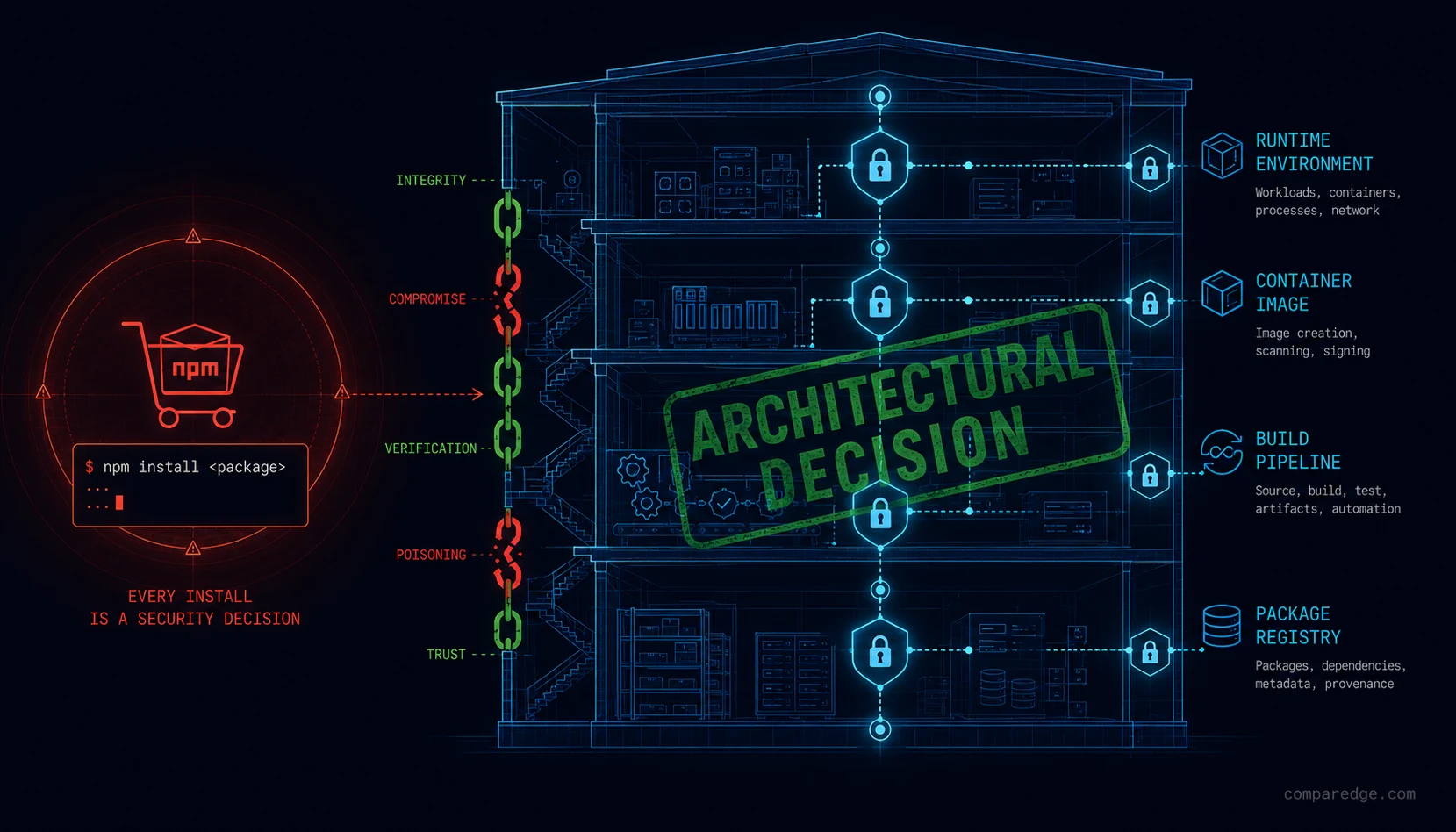
This does not mean you should stop using open-source software. It means you should stop treating npm install as a safe operation and start treating every dependency addition as a security decision that requires the same scrutiny as granting network access.
What should the CTO actually do?
The CTO's job here is to accept that supply chain security is not a tool purchase - it is an architectural decision. This means:
Pin every dependency to exact versions, including transitive dependencies. Use lock files religiously. Verify checksums. Run a private registry that mirrors only approved packages. Treat dependency updates as security-relevant changes that require review, not maintenance chores that get auto-merged.
Implement build reproducibility. If you cannot rebuild the same binary from the same source, you cannot verify that your build pipeline is not compromised. This is hard. Most organizations cannot do it. That gap is exactly what attackers exploit.
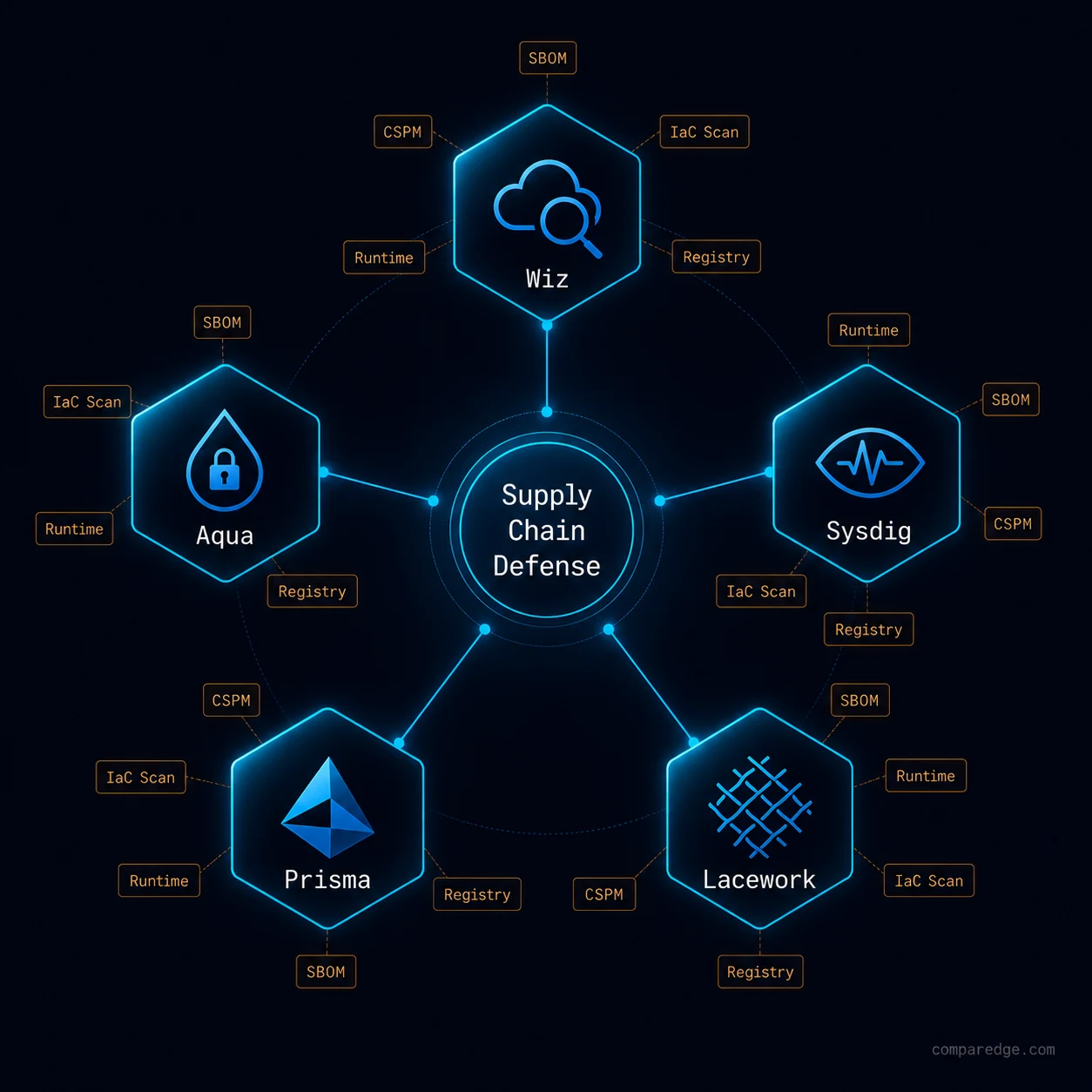
Adopt runtime security monitoring that watches for unexpected behavior from dependencies - unusual network connections, file system access patterns that do not match the package's stated purpose, elevated privilege requests. This is where cloud-native security platforms earn their keep.
| Tool | What it does | Complexity | Main weakness |
|---|---|---|---|
| Wiz | Cloud security posture, container scanning, dependency analysis | Medium | Heavy cloud focus, less useful for on-prem |
| Aqua Security | Container and serverless security, runtime protection | High | Steep learning curve, resource overhead |
| Sysdig | Runtime threat detection, Kubernetes security | High | Requires agents, complex deployment |
| Prisma Cloud | Full CNAPP - CSPM, CWPP, code security | Very High | Sprawling feature set, hard to configure well |
| Lacework | Anomaly-based threat detection, compliance | Medium | Anomaly detection creates noise in dynamic environments |
What should DevSecOps focus on?
DevSecOps needs to shift from vulnerability scanning to behavioral analysis. Scanning known CVEs is table stakes. The real threat is unknown malicious code in trusted packages.
Implement allow-listing for dependency capabilities. A date formatting library should not need network access. A logging library should not need file system write permissions outside its configured log directory. Tools that enforce capability boundaries at the dependency level are where the field needs to move.
Audit your CI/CD pipeline with the same rigor you apply to production infrastructure. Every GitHub Action, every Jenkins plugin, every build script is an attack surface. Treat them accordingly.
What does the CFO need to understand?
The CFO needs to understand that supply chain attacks have asymmetric economics. The cost of defense is continuous and high - dedicated security engineering time, tooling licenses, slower development velocity from dependency review processes. The cost of a successful attack is catastrophic and unpredictable - the SolarWinds breach cost affected organizations an estimated $100 billion collectively.
The rational financial position is to treat supply chain security as insurance with a very unfavorable cost-to-incident ratio but a very favorable cost-to-catastrophe ratio. Budget accordingly.
Compare Supply Chain Security Tools
The tools above defend against different attack vectors. Before committing to a platform, compare pricing, features, and real user ratings:
- Wiz vs Prisma Cloud - CSPM and CNAPP head-to-head
- Aqua Security vs Sysdig - Container security compared
- Browse all cloud security and DevSecOps tools on ComparEdge
Pricing for these platforms ranges from $15,000 to $500,000+ per year depending on environment size. Verify current pricing before any procurement decision.
Find the best tool for your use case: real pricing, user ratings, and feature comparisons for 495++ products.
Browse All Categories